
|
|
Here is example of an Autowise complete package number 4.
Autowise package can either be sent directly to your email, or by regular mail to your home address, your choice.
This is for a 1987 Toyota Supra Turbo.
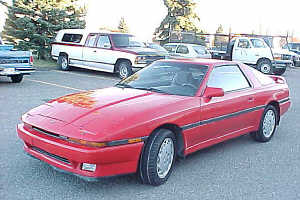 (Example of 1987 Toyota Supra
Turbo)
(Example of 1987 Toyota Supra
Turbo)
The VIN number given checked came out perfect with a clean title history.
PRICE
RECOMMENDATION:
The average price for an 1987 Toyota supra turbo is about $4000-5000US dollars, or $6500-9000CND dollars with about 60000 miles or about 100000km being the average mileage on this car, because of it limited winter capabilities limiting amount of miles car can rack up through life span.
The Customer of this Autowise vehicle recommendation lives in Canada,
Alberta, has one child 9years old boy, no pets, an 1995 Ford Ranger truck, and
plans to drive his Supra in the summer only.
The supra does have back seats which are actually fairly comfortable for
larger passengers, but perfect for cruising with their 9 year old son. The supra also has a targa top, like a t
roof without the t bar, making it a pleasant cruiser on hot summer days. The car he is looking at purchasing is an
1987 Toyota supra turbo white, the head gasket has been done with a Toyota
original head gasket, which means the problem could surface in the near future,
but as long as one gets it serviced regularly at a dealer ship, it should be
ok. The supra would be an alright car
to drive in the winter though, but because of its low ground clearance and rear
wheel drive, makes it difficult to drive in snow. The supra body is fairly rust resistant, so rust should again, be
no problem if driven in winter, as long as it is washed periodically.
Another car in the 1987 Toyota Supra Turbo Class would be the 1984-1989 Nissan 300zx Turbo, and is another car that should be looked into if the Supra doesn’t offer everything one desires. The 300zx is nearly identical regarding performance and is in the approx same price range, when not abit cheaper. Be careful though, in 1990 the 300zx’s price nearly doubled and so is its resale value. It is a completely different car, and can not be compared.
Comparison between 300zx, a Supra competitor, and should consider looking
at. Alternative for Supra.
|
TIPS WHILE TESTDRIVING AND WHAT TO LOOK FOR
- Always go for a test drive with the owner, and let HIM/HER drive, not you.
-
You will then see how well the owner is at driving the car, if
it is a standard, how well he releases the clutch, and if he abuses the car you
will likely be able to tell the way he drives.
COMPLETE MODEL
HISTORY:
Minor notes regarding 1987 Toyota supras are as follows:
The third generation of Supra’s rolled off the assembly line half way through 1986, designating them 1986.5 supras. Because it was the third generation of Toyota Supra’s, it is deemed MKIII Supra.
There were minor changes through out the life of MKIII which lasted from 1986.5 to 1992
The largest change during MKIII lifespan would be in 1989 when a new grille, spoiler, and minor engine and turbo tuning increasing power from 230hp at 5600rpm and 246 lb/ft of torque at 4000rpm in the 86.5-88 supra turbo to 232hp at 5600rpm and 254lb/ft of torque at 3200rpm making torque more usable at lower rpm’s.
Performance was approx 0-60mp/h in 6.7 to 7.0 sec, and 1/4mile in the low 15 second range anywhere between 15.0-15.4sec, and top speed for 5 spd models is approx 140-145 mph.
The turbo model was not introduced until 1987, with the non-turbo being the only model available in 1986. Through 1987 and 1988 minor engine modifications were preformed mainly to quite motor, not affecting hp or torque.
The interior was changed in 1989 with a different steering wheel, dash, and other minor changes making the interior more user friendly and modern.
Toyota Supra’s have a notorious problem with blowing head gaskets, a costly repair job anywhere from $500-$1000 US dollars to get repaired at a Toyota dealership. It is a difficult problem to diagnose just by looking and running the car in its early stages. It is best to get the car checked out by a mechanic if you are worried about this, it extremely common and should never be underestimated. It can even destroy your entire motor if not fixed when leaking. Ask the seller if he/she has ever had the problem checked out, or had any problems with it. If not, then that is why they might be selling it. If the head gasket has been replaced, ask what kind of head gasket has been used, and when it was done. If it has a metal head gasket installed and different head bolts, then the gasket will probably never leak, and you don’t have to worry about it. Regardless, anybody purchasing a Toyota Supra should always get this checked out.
Other than the head gasket problem, Supras are virtually
indestructible. The transmissions are
bullet proof, and the clutch can last the life of the car if driven properly.
Sales of 1986.5-1992 Supra Turbo and Non Turbo in US
1987 29 907
1988 19 596
1989 14 544
1990 6 419
1991 3 623
1992 1 193
1987 Toyota Supra Turbo as tested by Car and Drive
0-30mp/h 2.1(seconds)
0-40mp/h 3.5
0-50mp/h 4.7
0-60mp/h 6.4
0-70mp/h 8.7
0-80mp/h 10.9
0-90mp/h 14.4
0-100mp/h 18.2
¼ mile @ 15.0sec and 91mp/h
Top Speed 145mph
Braking 70-0 mp/h 188ft
Roadholding 0.83
Gas mileage-Town 18mpg, 23mpg Highway
Here are some detailed engine specs
|
|
|
|
|
|
Engine Code |
7M-GTE |
|
Engine Type |
I6, DOHC, 24-valve, Electronic Fuel Injection |
|
Displacement (cc) |
2,954 |
|
Horsepower |
230 @ 5,600 rpm |
|
Torque (ft-lbs) |
246 @ 4,000 rpm |
|
Max. Turbo Boost (psi) |
6.8 |
|
Compression Ratio |
8.4:1 |
STANDARD FEATURE ON 1987 TOYOTA SUPRA TURBO
- Turbocharged 3.0 Liter 6 Cylinder, Twin Cam Engine, 24 valve engine with intercooler
- Computer Controlled electronic fuel injection and ignition system
- Engine oil cooler
- Dual chrome tipped exhaust
- Close ratio 5-Speed manual overdrive transmission
- 4-wheel independent suspension double wishbone with gas-filled shock absorbers and front and rear stabilizer bars
- Power assisted rack-and-pinion
- Power assisted ventilated 4-wheel disc brakes
- 225/50VR16 uni-directional Goodyear "Gatorback" tires
- Full-size spare tire with steel wheel
- 16"x7" uni-directional aluminum alloy wheels
- Color Keyed front/rear bumpers with flexible lower edge
- Aerodynamic integrated rear spoiler
- Dual integrated power remote-controlled mirrors with defogger and wide-view passenger side convex mirror
- Retractable tungsten halogen headlights
- Integrated front halogen foglights
- Semi-concealed vented anti-lift windshield wipers
- Tinted side glass
- Theft deterrent system with starter interrupt
- Transparent wraparound wide protective side mouldings
- Front and rear mud guards
- Rear window wiper/washer with intermittent control
- High center-mount rear stoplight
- Tachometer; turbo boost, coolant temperature, and oil pressure gauges
- Resettable trip meter
- Variable speed Intermittent windshield wiper/washers
- Digital quartz clock
- Leather wrapped 3-Spoke steering wheel and shift knob
- Memory type tilt and telescopic steering wheel
- Cruise control
- Soft-touch automatic temperature control air conditioning and Flo-thru ventilation
- Power windows and centrally controlled power - with key-in ignition interlock and driver side mounted automatic "down" feature
- Fully console with padded arm rest
- Reclining front bucket Sport Seats with memory
- Driver's sport seat 8-way adjustment includes pneumatic lumbar and lateral support adjustments
- Fold-down split rear seat backs
- Cloth sport seat trim
- Cut pile carpeting with fully carpeted cargo area
- Dual illuminated visor vanity mirrors
- Remote hatch and fuel filler door releases
- Courtesy lights - includes glove box, ashtray, key illumination, footwell and rear cargo area lights
- Automatic off headlamp system
- Automatic illuminated entry fade out system
- Rear tinted glass shade band
- Tinted glass with shaded windshield band
- Rear electric rear window defogger with timer
- Retractable rear cargo cover
- Overhead dual map lights
- Electronic AM stereo/FM/MPX tuner with 4-speakers, auto-reverse full logic cassette, amplifier equalizer and 5-way acoustic flavor tone control equalizer
- Automatic diversity-type power antenna
- Sports Package - includes limited-slip differential, Toyota Electronic Modulated Suspension System (TEMS) and headlamp washers
OPTIONS
- Electronically controlled 4-Speed automatic overdrive transmission with shift pattern selector and high performance lock-up torque converter
- Anti-lock braking system
- Car cover
- Front-end mask
- Two-Tone paint
- Super monitor (trip computer/service reminder)
- Luxury carpeted floor mats with stitched Supra logo
- Removable sport roof
- Leather Seat Trim Package - includes leather Sport Seats, leather coordinated door trim
Brief History of Toyota Supras in general from toyotasupra.com
1967: Toyota 2000GT, precursor to the Supra, is introduced. - The Toyota 2000GT appeared as a prototype at the 1965 Tokyo motor show and was introduced as a production model in 1967. This limited-production sports car featured a 2.0 liter inline 6-cylinder, single-overhead-cam (SOHC) engine producing 150 horsepower. The car was the product of a joint engineering effort between Toyota and Yamaha. Of the approximate 337 cars produced, only 54 were imported for sale in the U.S. Market.
1979: The Celica Supra debuts. The first Celica Supra was introduced in America in 1979. Built on a Celica chassis that was lengthened 5.1 inches, the Supra upgraded the Celica's drive train by replacing the Celica's 4-cylinder engine with a 2.6-liter SOHC inline-6. The Supra also upgraded the Celica's solid rear axle with a four-link rear suspension with coil springs, lateral track bar and stabilizer bar. In appearance, the Supra was distinguished from the Celica by its longer wheelbase, wide "B" pillar, unique grille (styled after the 2000GT) and badging.
1982: The second generation Celica Supra is introduced. The second generation Celica Supra was introduced in 1982, with a greater emphasis on performance and handling. Its 2.8-liter inline, double-overhead-cam (DOHC), 6-cylinder engine developed 145 horsepower. It was visually separated from the Celica by its front end styling with distinctive disappearing headlamps, long power bulge hood and slit grill with integrated driving lights. Additional styling cues included wheel flares (later shared with the Celica GT-S), roof-mounted spoiler, and exterior paint schemes. The Supra also had four wheel disc brakes and an independent rear suspension (later shared with the Celica GTS). The 1982 Supra won Motor Trend's Import Car of the Year award.
1986.5: Supra separates from the Celica line. - In mid-year 1986, Celica and Supra officially separated. Celica became a front-drive sport economy car, while the third-generation Supra evolved into a true rear-wheel drive Sports/GT. Keeping the Supra on the path of increased performance and handling with each new generation, the third generation Supra was introduced with a 3.0-liter inline-6 producing 200 horsepower; about 40 horsepower more than the previous generation. With its four-wheel independent double-wishbone suspension and optional Toyota Electronically Modulated Suspension (TEMS), the Supra became the showcase for Toyota technology.
1987: The Supra Turbo debuts. - In 1987 the Supra Turbo was introduced. This high-performance GT featured a turbocharged and intercooled inline-6 cylinder engine that produced 232 horsepower. Anti-lock brakes (ABS) were available for the first time.
1993: The fourth-generation Supra is introduced. - 1993 marked the introduction of the fourth generation Supra with a choice of two powerful DOHC engines (turbo or naturally aspirated) and numerous performance features. The new Supra is now a true sports car. The base model came equipped with a 24-valve inline-6 developing 220 horsepower - almost as much as the previous Turbo. The new Turbo featured twin sequential turbochargers and an air-to-air intercooler to produce a whopping 320 horsepower - the most powerful engine offered in the U.S. by a volume import manufacturer at that time.
1999: Toyota Officially Halts Supra Export. - In the face of steadily
declining worldwide sales, and ever increasing emissions standards, Toyota
pulls the plug on the export of the Supra. After 19 wonderful years the thrill
is gone (at least if you live outside of Japan). Production continues with the
Supra becoming a Japan only model for 99 and 2000 (and beyond?).
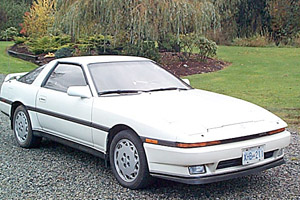
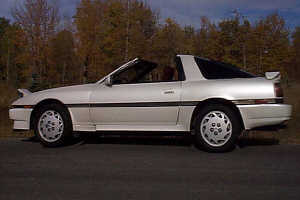
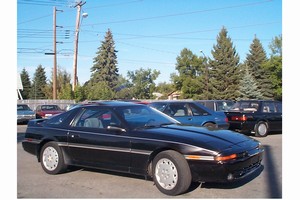
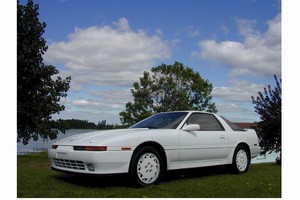
These are 1986.5-1988 Supra (Note tail/grille)
Here is a Vin Decoder for the supras
The VIN Plate is located on or adjacent to the firewall within the engine
compartment.
|
|
1 |
2 |
3 |
4 |
5 |
6 |
7 |
8 |
9 |
10 |
11 |
12 |
13 |
14 |
15 |
16 |
17 |
|
|
Example VIN # |
J |
T |
2 |
M |
A |
6 |
7 |
L |
O |
D |
0 |
0 |
6 |
7 |
2 |
1 |
4 |
|
|
Position Codes |
|
|||||||||||||||||
|
1 - Country of Origin |
|
|||||||||||||||||
|
J = Japan (All Supras are produced in Japan and this
position should be J) |
||||||||||||||||||
|
2 - Manufacturer |
||||||||||||||||||
|
T = Toyota |
||||||||||||||||||
|
3 - Vehicle Type |
||||||||||||||||||
|
2 = passenger car |
||||||||||||||||||
|
4 -8 The following five categories of data are covered
by these numbers (not necessarily in this order) |
||||||||||||||||||
|
Line |
||||||||||||||||||
|
Series |
||||||||||||||||||
|
Body Type |
||||||||||||||||||
|
Engine Type |
||||||||||||||||||
|
Restraint System |
||||||||||||||||||
|
9 - Check Digit |
||||||||||||||||||
|
0-9 or letter X |
||||||||||||||||||
|
10 - Model Year (The letters I, O, and Q are not used) |
||||||||||||||||||
|
A = 1980 |
||||||||||||||||||
|
B = 1981 |
||||||||||||||||||
|
C = 1982 |
||||||||||||||||||
|
D = 1983 |
||||||||||||||||||
|
E = 1984 |
||||||||||||||||||
|
F = 1985 |
||||||||||||||||||
|
G = 1986 |
||||||||||||||||||
|
H = 1987 |
||||||||||||||||||
|
J = 1988 |
||||||||||||||||||
|
K = 1989 |
||||||||||||||||||
|
L = 1990 |
||||||||||||||||||
|
M = 1991 |
||||||||||||||||||
|
N = 1992 |
||||||||||||||||||
|
P = 1993 |
||||||||||||||||||
|
R = 1994 |
||||||||||||||||||
|
S = 1995 |
||||||||||||||||||
|
P = 1996 |
||||||||||||||||||
|
T = 1997 |
||||||||||||||||||
|
11 - Assembly Plant |
||||||||||||||||||
|
C = Ontario Canada |
||||||||||||||||||
|
O = (It is a good chance that all supras are coded “O”) |
||||||||||||||||||
|
U = Georgetown Kentucky |
||||||||||||||||||
|
Z = Fremont California |
||||||||||||||||||
|
12 - 18 Sequential Serial Number |
||||||||||||||||||
Autowise package number 4, and all Autowise packages will include either the same, more, or less information depending on make and model, and availability of information. All information is true or to the best of our knowledge. No information is guaranteed, but correct from our sources and to our Autowise agents, if it is questionable, an Autowise agent will inform the receiver of the information regarding the questionability of the information.
Copyright 2000 Autowiseonline
Charts and tables from toyotasupra.com
Any questions or concerns please feel free to contact autowise@hotmail.com about anything regarding this site.
Thank you from all the staff at Autowiseonline.